


How to Calculate with Negative Numbers
When you add numbers together, you jump to the right on the real number line. When you subtract, which means you’re using a minus sign, you jump to the left on the real number line. Let’s first see what happens when you subtract a positive number from a negative number. In that case, you start on a negative number and jump further to the left.
Example 1
You need to subtract from . You can see in the figure below that we start with the number . Then we jump four numbers to the left on the real line:
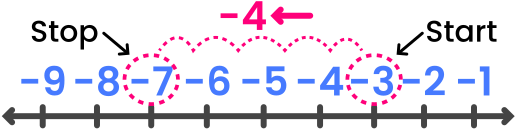
This gives you .
Example 2
You need to subtract from . You can see in the figure below that we start with the number . Then we jump ten numbers to the left on the real line:

This gives you .
Next, we’ll look at what happens when you subtract a positive number from another positive number, but the number we’re subtracting is greater than the number we’re subtracting it from. In these cases the answer will end up being a negative number. This is because the number of jumps from the starting point to is less than the total number of jumps you need to make. It will look like this:
Example 3
You need to subtract from . On the real line below, you can see that we start on and jump numbers to the left:
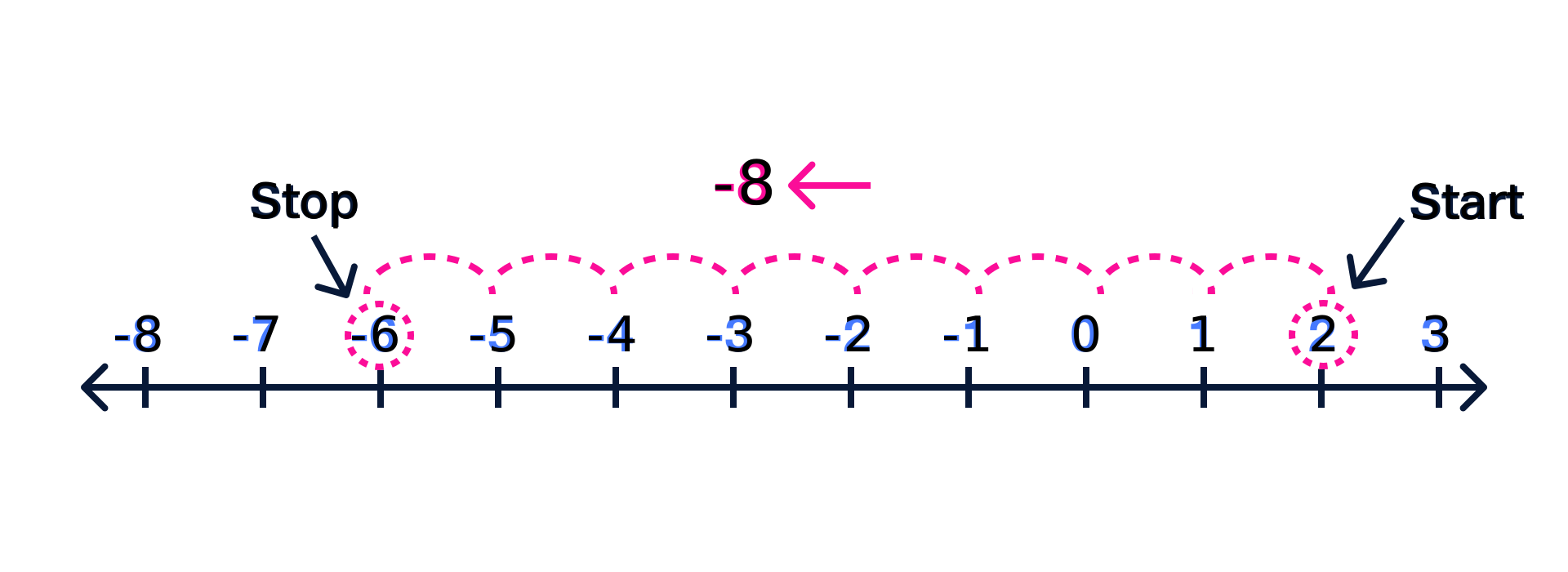
For that reason, .
Think About This
What do we need negative numbers for?
It might seem weird to do calculations with negative numbers. When do we actually use them in day-to-day life?
Measuring temperature is an example from day-to-day life where we use negative numbers.
Look at Example 1 above. The calculation you did there might as well have been an exercise about temperature:
Somewhere in Norway the temperature is °C right now. You know that it will be °C colder the next day. What will the temperature be the next day?
The next day, the temperature will be . This means that is colder than .
